It’s Black Maternal Health Week: April 11–17, 2026
UWOC is deeply grateful to the two women who shared their personal stories and expertise with us this week. Their reflections bring honesty, lived experience, and powerful insight to this moment.
A Personal Reflection from Jasmine Hammonds, Founder/Executive Director of The Obsidian Milk Collective:
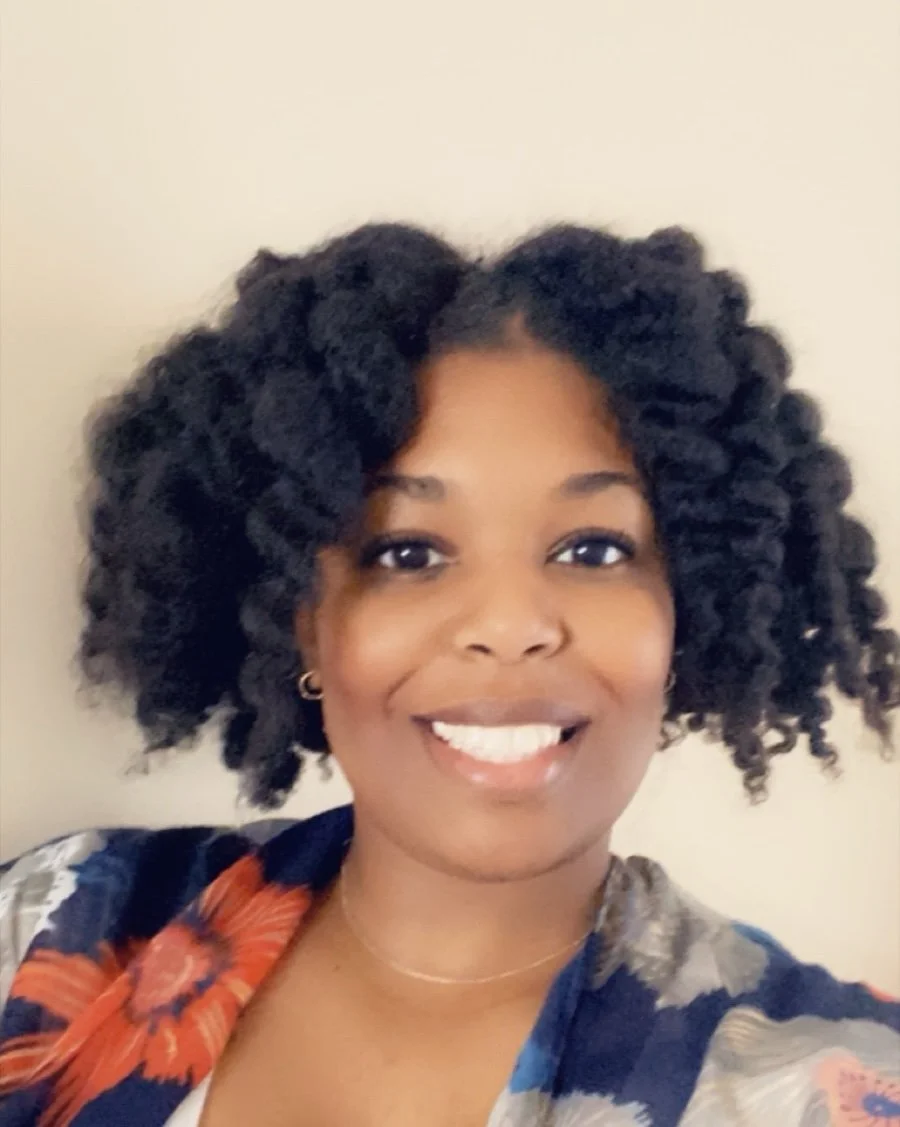
Jasmine Hammonds, Founder/Executive Director of The Obsidian Milk Collective
“Black Maternal Health Week always brings me back to one central truth: this work is not abstract for me—it is me.
I am not only someone who works within maternal health. I am someone who must navigate it. The care I advocate for, the systems I challenge, and the spaces I work to create are not separate from my own life. I think about what it means to be supported as a Black woman. I think about what it means for my Black daughters. Because of that, this work is deeply personal.
In my work across reproductive health and community care, I’ve seen how often Black families are expected to navigate disconnected systems—piecemeal support, fragmented services, and gaps that leave too much to chance.
But I often imagine something different.
I imagine one person, fully supported. Where they’re held within a network of providers and community organizations that are in communication with one another, not operating in isolation. Where prenatal care is connected to dental care, pelvic floor therapy, and mental health support. Where lactation care is individualized and accessible. Where reproductive health resources are within reach, so that autonomy is protected at every stage.
Not because something is wrong, but because comprehensive care should be the standard.
Reproductive healthcare has shown me just how interconnected all of this is. It requires us to move beyond isolated services and toward a continuum of care that reflects the full experience of being supported.
Black Maternal Health Week calls us to be honest about what must change—but also bold enough to imagine what could exist.
For me, this work is about more than improving outcomes. It’s the kind of care that ensures Black families are not left to navigate alone—but are intentionally supported, every step of the way.”
~Jasmine Hammonds (she/her)
The Obsidian Milk Collective Founder/Executive Director
Rest Is Resistance from Jasmine Mitchell CPT, CPPC

Jasmine Mitchell CPT, CPPC
“Come on, Jasmine. You’re fine. Just get up and push through. You’re stronger than this.” This was the inner dialogue I repeated to myself as I peeled what felt like a lifeless body out of bed each morning. “Mommy, mommy, mommy” rings like a child-sized siren — the sound that now marks the start and finish of everything I have become. I wake up, force a smile, and immediately begin meeting the needs of my family while carrying dread, overwhelm, and exhaustion I never speak out loud.
Sound familiar?
A Strong Black Mom showing up — even when her own needs remain unmet. We come by it honestly. For generations, our culture has glorified pushing through and being strong. That strength was how our mothers and grandmothers survived.
But survival was never meant to be the ceiling.
We have learned every cue and cry of our children while teaching ourselves to silence our own bodies’ blaring alarms — skipping meals for the sake of time, working through pain because addressing it feels like weakness, functioning on four hours of sleep because “I’ll rest when I’m dead.” Yes, Black women face inexcusable disparities in perinatal care. But rest is an act of resistance — and resistance starts with us.
Rest is not just sleep. Rest is setting boundaries and standing on them. It is asking for help even when it’s hard. It is saying “no” and letting that be enough — no explanation needed. And sometimes, rest looks like moving your body with intention. Whether it’s gentle stretching, a walk around the neighborhood, or finally making it to that fitness class, rest is not the absence of motion — it is the presence of intention. In the postpartum season especially, rest is not a luxury. It is how your body heals, recovers, and learns to trust you again. Yes — your body needs to know it can trust you to take care of it.
Black Maternal Health Week exists because the crisis is real. Black women in the U.S. are three times more likely to die from pregnancy-related causes than white women — and advances in medicine and technology have not closed that gap. That tells us what we already know: this is systemic. And the most powerful way to disrupt a broken system is to resist it.
Resist the urge to overwork.
Resist the pressure to overperform.
Resist the need to always show up.
Choose rest this week, Momma. Choose to put yourself first. Choose to acknowledge your own needs out loud. You were not created to simply survive — you were created to thrive.
~ Jasmine Mitchell CPT, CPPC